DOE's Genesis Mission turns one: what a year of AI-for-science spending means for research code
The US Department of Energy's flagship AI-for-science programme marks its first anniversary this week. Its director says the platform is live and 297 projects are funded. He also says the hard part is data and money, and both affect the people who write research software.
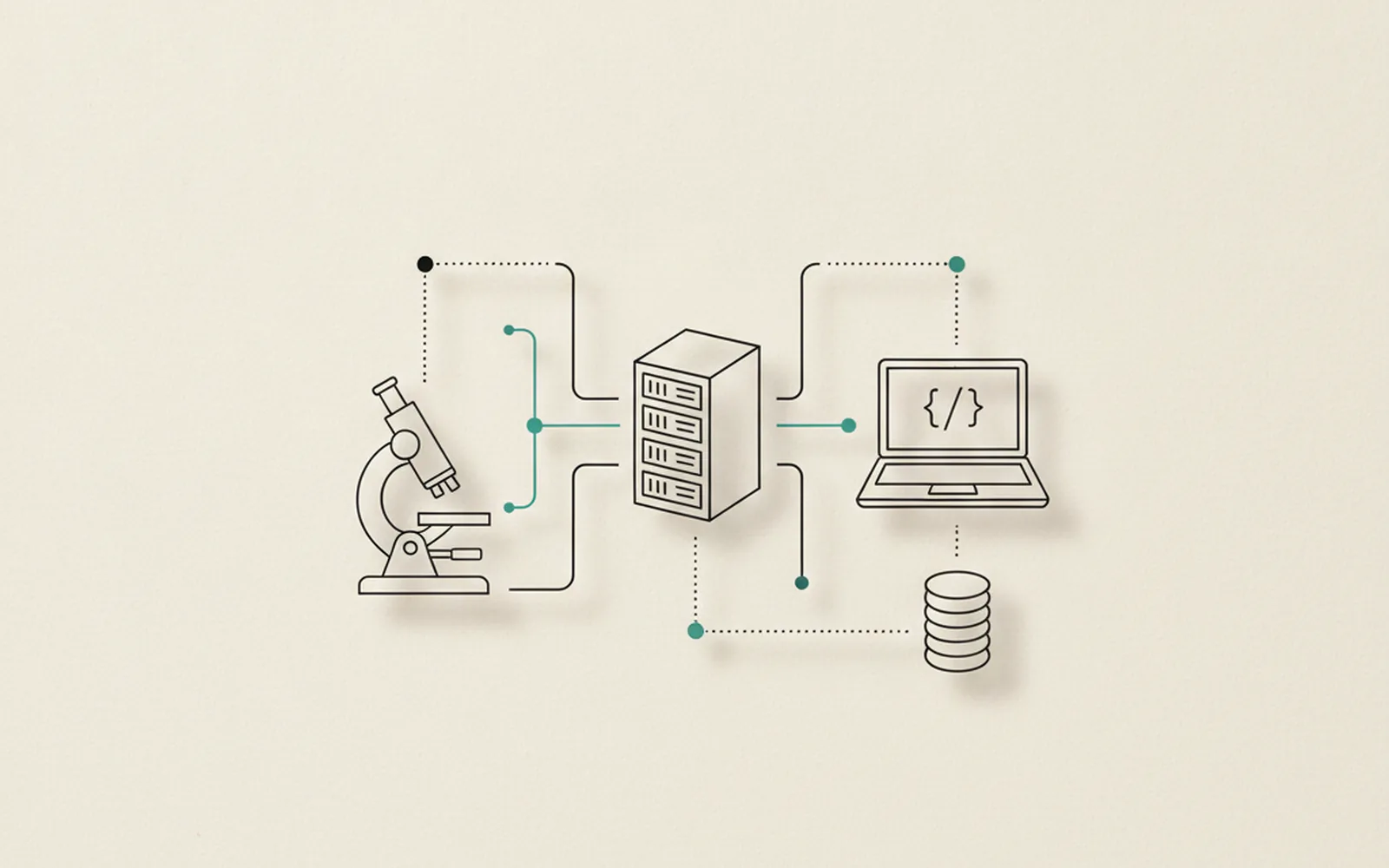
- DOE's Genesis Mission, launched by executive order in November 2025, reports 297 funded projects, 33 national challenges and a shared research platform after one year.
- Under Secretary for Science Darío Gil told FedScoop on 23 November 2026 that making datasets AI-ready "is not the same as saying the data is available for download".
- Fiscal 2027 funding is not settled. A Senate draft recommends about $467.8 million for Genesis-related work, and the current continuing resolution expires on 11 December.
One year ago the White House launched the Genesis Mission, a Department of Energy effort to use AI and high-performance computing to double the productivity of American science within a decade. This week DOE published a year-one summary, and the programme's director, Under Secretary for Science Darío Gil, gave two interviews about it: one to AIP's FYI science policy service on 20 November and one to FedScoop on 23 November.
The headline numbers are about compute and budgets. For people who write research code, the more useful part is what Gil said about data. He told FedScoop that "getting data AI-ready is not the same as saying the data is available for download on a website or in a database". That turns a policy goal into software work: schemas, provenance, documented interfaces and access control.
Few research groups have staff for that layer. Some put it in the hands of their research software engineers. Others keep the analysis pipeline in-house and hire one of the web portal development companies to build the search interface, the API and the login around it. Either way, someone has to own the code that sits between a dataset and the tools that query it.
What did year one deliver?
In its first year the Genesis Mission funded 297 projects, built a dedicated AI system and opened a shared research platform, according to Gil. He describes three parts of the programme: research challenges, a shared platform and training. In the AIP interview he listed these results:
- Challenges and projects. 33 national science and technology challenges defined with 15 federal agencies, and 297 projects funded in all 50 states after what Gil called the most competitive call in DOE's history.
- Compute. Lux, an AI system at Oak Ridge National Laboratory built in under 11 months, which Gil said debuted as the 14th most powerful high-performance computing system in the world.
- A shared platform. For the first time, he said, researchers at any national laboratory get a single identity and login, and university partners can use it too. The platform offers frontier models, HPC time, "hundreds of data sets" and tooling for agentic workflows.
- Partners. A consortium of more than 70 organisations, $2.5 billion pledged by industry in compute, model access and tokens, and about $5 billion committed across federal agencies.
Gil called year one a "startup year" and said the platform will keep changing: "When will you know that you built the final Internet?"
What does "AI-ready data" mean in practice?
Gil told FedScoop that teams across the labs have brought hundreds of datasets up to standard and set common rules in the process. He did not publish the checklist. In research software terms, though, a dataset that a model or an agent can use reliably usually needs:
- A stable, documented schema, with units and missing-value conventions written down rather than implied.
- Provenance: which instrument, which processing code and which version produced each file.
- Programmatic access, such as an API or a query endpoint, instead of a folder of downloads.
- Clear terms of reuse and persistent identifiers, so results can be cited and repeated.
None of this is new. It is close to the FAIR principles for research software. What changes is who reads the data. A human analyst can often guess what an unlabelled column means, but a model or an agent querying hundreds of datasets cannot ask.
Is the money there?
Not yet in full: FedScoop reports that Congress has not passed fiscal 2027 appropriations for the programme. The current position:
- Rejected request. Both chambers rejected a White House request for a $1.2 billion budget for DOE's AI and quantum office.
- Senate draft. It recommends about $467.8 million for Genesis-related work across three DOE offices.
- Stopgap funding. DOE is running on fiscal 2026 levels under a continuing resolution that expires on 11 December.
Gil told AIP that "the overall investments that are going to be required will be larger" than current Senate proposals.
For grant holders, the practical point is that platform features, new funding calls and the planned fellowship programme depend on that outcome.
What should research software teams do now?
Whether or not your group joins a Genesis project, the steps that make data usable for shared platforms are the same:
- Treat data interfaces as software. Put loaders, schemas and validation in version control with tests, just like the analysis code.
- Record provenance automatically. Let the pipeline write which code version produced each output, so nobody has to reconstruct it later.
- Plan for a portal or API early. Our guide to building a science gateway covers the main design choices.
- Budget for engineering. Shared platforms like Genesis or TACC's Sagebrush inference service lower compute costs, but someone still has to maintain the code. See our piece on research software engineers.
Questions about the Genesis Mission
What is the Genesis Mission?
The Genesis Mission is a US Department of Energy programme, launched by executive order in November 2025, to use AI and advanced computing to double the productivity of American science and engineering within a decade. It is led by Under Secretary for Science Darío Gil.
What has it done in its first year?
According to Gil, it defined 33 national science and technology challenges with 15 federal agencies, funded 297 projects in all 50 states, built the Lux AI system at Oak Ridge National Laboratory, opened a shared platform with a single login for national lab and university researchers, and gathered a consortium of more than 70 organisations.
What does AI-ready data mean?
Gil told FedScoop that getting data AI-ready is not the same as making it available for download. In practice it means consistent formats, documented schemas, provenance and access through an interface that software, including AI agents, can query reliably.
Is the Genesis Mission fully funded?
Not yet. Congress has not passed fiscal 2027 appropriations for it. A Senate draft recommends roughly 467.8 million dollars for Genesis-related work across three DOE offices, and DOE is running on fiscal 2026 levels under a continuing resolution that expires on 11 December.
Keep reading. More from the desk.
TACC launches Sagebrush: an always-on AI inference service for open science
TACC is building Sagebrush, an NSF-funded service that keeps open AI models and RAG tools always on for researchers. What it means for research code.
Only 1 in 8 clinical prediction studies shares its code, MIT and Dana-Farber review finds
An MIT and Dana-Farber review of 3,967 clinical prediction studies found that 12.2% shared code, and few repositories were easy to rerun. What to do.
AMD releases HPC Assistant: an open-source AI guide for supercomputer users
AMD's open-source HPC Assistant answers researchers' questions from their own centre's documentation. It debuted on LUMI and is coming to Frontier.