AMD releases HPC Assistant: an open-source AI guide for supercomputer users
AMD used SC26 to release an open-source assistant that answers questions about a specific supercomputer, writes job scripts and reports GPU and energy use. AMD pitches it as a way to cut repetitive support requests. Anything it writes also needs the same checks as any other tool that writes code for you.
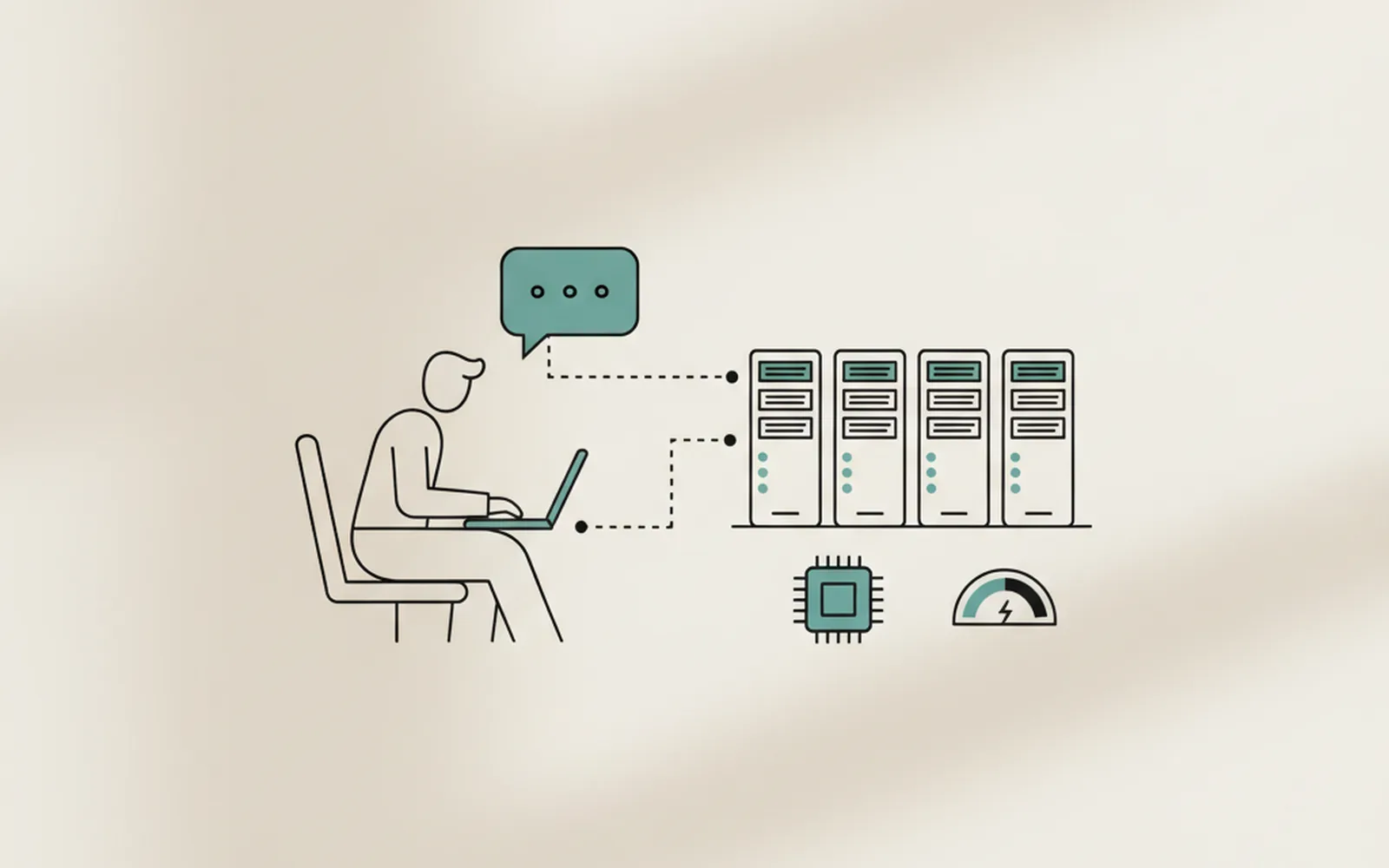
- AMD released HPC Assistant, an open-source AI assistant for supercomputer users, on 16 November 2026 ahead of SC26 in Chicago. The code is on GitHub under the MIT licence.
- The first version was built with CSC for the LUMI supercomputer and answers from LUMI's own documentation. AMD is now working with Oak Ridge National Laboratory to bring it to Frontier.
- Job scripts and kernel changes the assistant produces are still code. Keep them in version control, test them against a known result and review them before production runs.
On 16 November 2026, AMD released HPC Assistant, an open-source AI assistant for researchers who run work on supercomputers. The first version was built with CSC, the Finnish IT Center for Science, for the LUMI supercomputer. AMD is now adapting it for Frontier at Oak Ridge National Laboratory. HPCwire covered the launch during SC26 in Chicago.
The assistant does not do science. It handles the work around the science: where to put a dataset, how to write a batch script, why a GPU job runs slowly, how much energy a run used. Today many groups give these questions to a PhD student or to the centre's help desk.
AMD says accurate answers depend on connecting the assistant to each centre's own documentation, policies and scheduler. Another centre, or a large lab with its own cluster, would have to do that integration work. It is ordinary software engineering, done by an in-house research software engineering team or by an outside team offering chatbot development services. Either way, the connectors and prompts belong in version control like the rest of the infrastructure.
What did AMD release?
AMD released an assistant that turns plain-language requests into commands, job scripts and performance reports for one specific HPC system. According to AMD's announcement, it searches the centre's approved documentation, so answers about quotas, purge policies and scheduler rules match the real system. The source code is on GitHub under the MIT licence.
CSC connected the first version to LUMI's knowledge base. Pekka Manninen, Director of Science and Technology at CSC, said in the announcement: "It understands the full researcher workflow, from job submission to GPU profiling, energy visibility and launching scientific models without manual environment setup."
At Oak Ridge, computational scientist Antigoni Georgiadou said the Frontier version should give users "an AI-powered guide to help them make the most of every compute hour". AMD says feedback from the 23 institutions of the ADAC community informs that work.
What can the assistant do?
AMD lists five working features and two previews shown at SC26:
- Site-specific answers. Ask where to put a 100 GB dataset, and it gives the right directory, quota and purge policy for that system.
- Files and jobs. It syncs files, writes and submits batch scripts, monitors jobs and retrieves results.
- GPU profiling. It reports compute use, cache efficiency and memory traffic, and points to the bottleneck.
- Energy per job. It shows job-level energy use from Omnistat metrics and Grafana, so runs can be compared.
- Kernel tuning. It submits and monitors GEAK optimisation jobs for matrix-heavy kernels on AMD GPUs.
- Science agents (preview). On LUMI it can start the OpenFold3 protein-structure service from an amino-acid sequence, with no manual setup.
- AIM Agent (preview). It reads a model repository, builds and tests a container and writes a deployment report.
These descriptions come from AMD and CSC. No independent evaluation of the assistant has been published yet.
Why does this matter for research code?
A batch script is code, and so is a tuned kernel. If an assistant writes the script that produced a figure, that script is part of the method. It needs to be saved with the analysis, not left in a chat history.
Kernel tuning carries a second risk. A faster kernel is only useful if it gives the same answer as the old one, within a stated tolerance. That is a regression test, and many research codes still lack one. Our guide to testing research code shows how to start with a single known-answer check.
The open licence matters too. A centre can read the code, see what the assistant is allowed to run and adapt it to local rules. Our earlier post on NVIDIA's science agents raised the same point about agents that change research code.
What should researchers and HPC centres check?
- Save what it generates. Commit job scripts and config files next to the analysis code, with the version of the assistant noted in the README.
- Keep a reference result. Before you accept a tuned kernel or a new environment, compare the output with a trusted earlier run.
- Use a test allocation first. Let the assistant submit jobs to a test queue before it touches large production allocations.
- Check the documentation it reads. Answers are only as current as the centre's docs. Outdated pages give outdated advice.
- Review before production runs. Someone who knows the code reads the change. Our review checklist works for generated scripts too.
Questions about AMD HPC Assistant
What is AMD HPC Assistant?
An open-source AI assistant AMD released on 16 November 2026. It answers questions about a specific supercomputer from that centre's documentation, writes and submits batch jobs, and reports GPU performance and energy use. The code is on GitHub under the MIT licence.
Which supercomputers use it?
The first version was built with CSC for LUMI in Finland and is connected to LUMI's knowledge base. AMD has started working with Oak Ridge National Laboratory to bring it to Frontier.
Can other HPC centres run it?
Yes, the code is open source and AMD invites centres to adapt it. To give accurate answers, it has to be connected to the centre's own documentation, storage policies and scheduler.
Should researchers trust the job scripts it writes?
Treat them like any code you did not write yourself. Keep them in version control, test the results against a known reference run, and have someone review changes before large production jobs.
Keep reading. More from the desk.

NVIDIA launches Nemotron for Science: AI agents that run and repair research code
NVIDIA released an open kit for science agents at SC26. A KTH agent fixed 81% of broken GROMACS setups overnight. Here is what labs should check first.

OpenAI study: scientists say AI speeds up research code, but checking it is the hard part
A new OpenAI study of 1,819 scientists finds research code is where AI saves the most time. It is also where scientists spend the most effort checking the answers.
Research software engineers: who they are and how to work with them
Research software engineers combine research knowledge with software skills. Many groups only call them when something breaks. This guide explains the role and how to bring an RSE in early, when it helps most.