NVIDIA launches Nemotron for Science: AI agents that run and repair research code
NVIDIA used SC26 to release an open model, a chemistry dataset and training recipes for science agents. The early results are impressive. They also raise the same questions as any code a lab did not write itself.
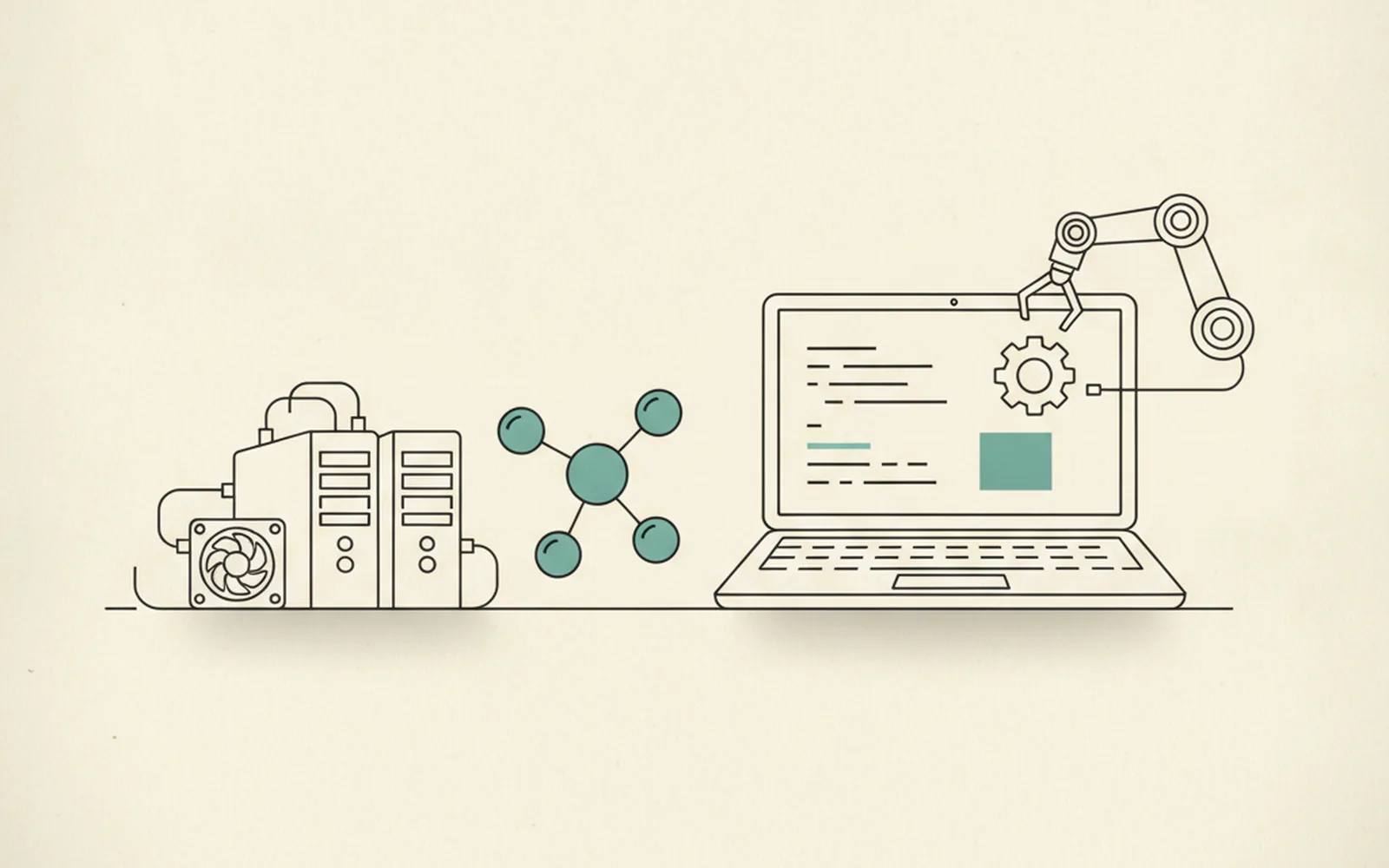
- NVIDIA released Nemotron for Science at SC26 on 16 November 2026: an open model, a dataset of nearly 50,000 chemistry questions and post-training recipes for science agents.
- A KTH agent fixed 81% of broken GROMACS setups overnight, according to NVIDIA. These results are reported by the vendor and its partners and have not been verified independently.
- Treat an agent like a new contributor: work on a branch, compare against a reference result, and have a person review every change.
On 16 November 2026, at the SC26 supercomputing conference in Chicago, NVIDIA introduced Nemotron for Science. It is an open package for building AI agents that plan experiments, run code and check results on a researcher's own systems. Techstrong.ai and SiliconANGLE covered the launch the same day.
Most SC26 news was about hardware. This item is about research code. One of NVIDIA's showcase agents does not do chemistry. It finds and fixes broken simulation setups, a job that in many groups falls to a PhD student or a research software engineer.
Some groups will try the released model as it is. Others will want an agent wired into their own pipeline, scheduler and data, with logging and limits on what it may change. That second path is software engineering. It is the kind of work offered by ai agent development services, or by an in-house RSE team. Either way, the agent's code needs the same tests and review as the rest of the pipeline.
What did NVIDIA announce?
According to NVIDIA's press release, Nemotron for Science has three parts:
- An open model. Nemotron 3.5 Super VL, published on Hugging Face.
- A dataset. LitmusBench v0.2, nearly 50,000 chemistry questions for training and evaluation.
- Post-training recipes. Guidance for adapting the model to a specific scientific domain.
The package is optimised for NVIDIA's 128 GB DGX Spark desktop systems. In his SC26 keynote post, NVIDIA vice president Ian Buck framed it as local control: "You own your data. You own the model."
What did the early agents actually do?
The early agents repaired simulation setups, chose which simulations to run and ported code to GPUs. NVIDIA listed several partner projects; these three are the closest to everyday research software:
| Group | What the agent did | Reported result |
|---|---|---|
| KTH Royal Institute of Technology | Repairs broken GROMACS molecular dynamics setups | Fixed 81% of test cases in one overnight run on a single DGX Spark |
| Argonne National Laboratory | Model added to the StructBioReasoner multi-agent platform for protein therapeutics | From one prompt, an agent picked simulations to run and found two new binding sites |
| Weather Research and Forecasting (WRF) | NVIDIA's Nsight AI Porting Agent ported code to GPUs | More than 5x speedup, using 150 million tokens |
All of these figures come from NVIDIA and its partners. None of them has yet been checked independently or tested in a peer-reviewed study.
Why does this matter for research software?
A broken simulation input is a software defect, and so is a port that runs fast but changes the numbers. An agent that fixes 81% of setups overnight saves real time. The other 19%, and any fix that runs cleanly but changes the physics, still needs a person who understands the model.
The WRF example shows a second risk. A 5x speedup is only useful if the ported code gives the same answer as the original, within a stated tolerance. That is a regression test, and many research codes do not have one. Our guide to testing research code explains how to start with a single known-answer check.
There is also a reproducibility question. If an agent edits an input file, the paper needs to say which version ran. Our post on reproducible environments covers how to pin the software around the code.
What should a lab check before letting an agent touch its code?
- Run it on a branch. Every change the agent makes lands as a commit you can read and revert. See version control for researchers.
- Keep a reference result. Before any repair or port, save outputs from a trusted run and compare against them automatically.
- Limit what it can reach. Give the agent a sandbox and a test allocation, not write access to shared data or the production queue.
- Record the model and version. Note the model, its version and the prompts in the methods or README, as you would for any other tool in the analysis.
- Review before merge. A domain expert reads the change. Our review checklist works for agent output too.
Questions about Nemotron for Science
What is Nemotron for Science?
An open package NVIDIA announced at SC26 on 16 November 2026. It combines the Nemotron 3.5 Super VL open model, the LitmusBench v0.2 chemistry dataset of nearly 50,000 questions, and post-training recipes for building science agents. It is available on Hugging Face.
What did the KTH GROMACS agent do?
An agent built at KTH Royal Institute of Technology repairs broken GROMACS molecular dynamics setups. In one overnight run on a single DGX Spark it fixed 81% of the test cases, according to NVIDIA.
Can an agent's fix be trusted without review?
Not on its own. The 81% figure comes from a vendor announcement and refers to test cases, not to published results. Treat an agent's change like a pull request: keep it in version control, test it against a known answer and have a person review it.
Do research groups need their own hardware to use it?
No, but NVIDIA's pitch is local control. The model is optimised for DGX Spark desktop systems, and Ian Buck said: "You own your data. You own the model." Groups can also run open models on existing clusters or cloud allocations.
Keep reading. More from the desk.

OpenAI study: scientists say AI speeds up research code, but checking it is the hard part
A new OpenAI study of 1,819 scientists finds research code is where AI saves the most time. It is also where scientists spend the most effort checking the answers.
Research software engineers: who they are and how to work with them
Research software engineers combine research knowledge with software skills. Many groups only call them when something breaks. This guide explains the role and how to bring an RSE in early, when it helps most.
OSF stops accepting new projects: what it means for research code
OSF no longer accepts new projects, and existing ones turn read-only on 19 February 2027. Here is the timeline and a migration plan for research code.