OSF stops accepting new projects: what it means for research code
The Center for Open Science has started phasing out OSF Projects. Here is the timeline, what stays online and a migration checklist for labs that kept code there.
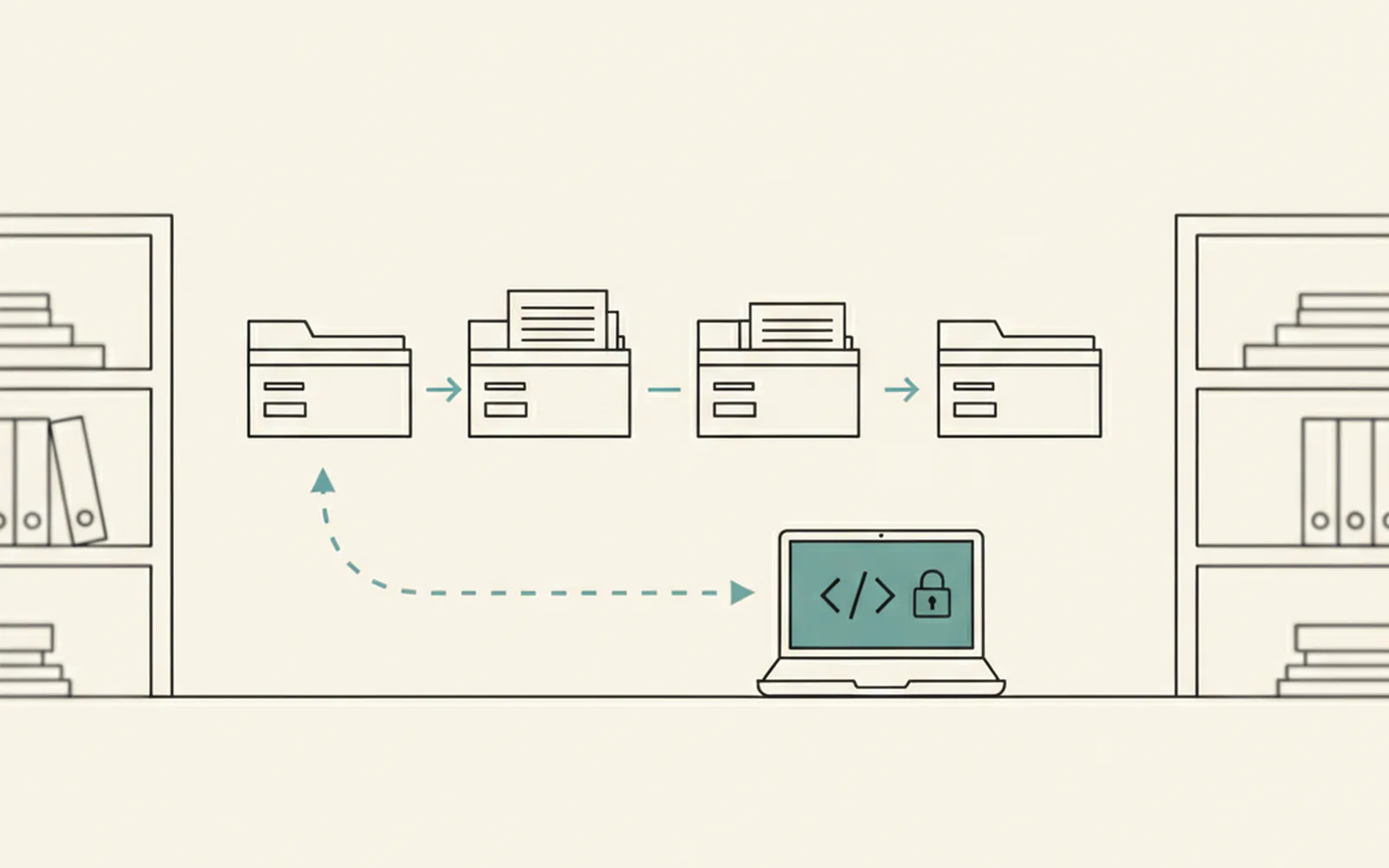
- Since 16 November 2026 OSF accepts no new projects or components; all projects become read-only on 19 February 2027.
- Public projects and their DOIs stay online. Registrations and preprints are not affected.
- Move active code to a forge such as GitHub, GitLab or Codeberg and archive releases with a DOI before the February freeze.
As of today, 16 November 2026, the Open Science Framework no longer lets anyone create a new project or component. The Center for Open Science (COS), the nonprofit that runs OSF, is phasing out the Projects workflow that researchers used for collaboration, file management and storage. On 19 February 2027 every existing OSF project, public or private, becomes read-only, according to the official COS announcement.
The reason is money. COS says that keeping the current, flexible OSF running "would require raising $4-5M per year for the next several years", and that it cannot expect that level of support in the present funding environment. Nature reported the plan under the headline "Popular open-science platform to stop hosting data and code amid funding concerns".
For groups that kept analysis scripts in OSF projects, the job now is migration: picking a new home for the code, moving it in a sensible order and finding someone to do the work before the February freeze. Labs with a research software engineer can usually script the move. Groups without one often hire short-term help, such as a contract developer brought in as an outside engineer to augment the team for a few weeks, so the work does not land on a doctoral student halfway through a thesis.
What changes on OSF, and when?
The change happens in two steps, with a third announced for later. The details below come from the COS announcement and the OSF support page on the transition.
| Date | What happens |
|---|---|
| 16 November 2026 | No new projects or components can be created. Existing projects can still be edited. New add-ons cannot be configured, and API functions that create projects are deprecated. |
| 19 February 2027 | All projects become read-only and editing ends. Connected Google Drive, Dropbox and OneDrive add-ons keep listing files but can no longer be changed through OSF. |
| Later, with notice | COS expects to remove private projects and says it intends to give at least 12 months' notice. |
For unpublished work the last row matters most: private projects stay readable after February, but not indefinitely.
What stays on OSF?
Registrations, preprints and search are not affected. COS will keep supporting preregistration through OSF Registries, community-run preprint servers and links between research outputs held in other repositories. Public projects stay online as a read-only record, and their DOIs continue to resolve. Citations in published papers keep working.
Where should research code go now?
Code should go to a version-controlled forge for day-to-day work, with each release archived in a repository that issues a DOI. OSF's own guide to choosing a repository suggests:
- Code: GitHub, GitLab, Codeberg, Forgejo and Zenodo.
- Data: Dataverse, Dryad, Figshare, Zenodo and others.
- Methods: protocols.io.
The same guide tells researchers to check with their institution first, because many universities run their own repositories. Duke University Libraries and other research libraries have published local guidance along the same lines.
The pattern we recommend is the one in our guide to archiving code with a DOI: keep the working repository on a forge, connect it to Zenodo, and let each tagged release get its own identifier. If your group has never used Git, start with our introduction to version control for researchers.
What should a lab do before 19 February?
Treat the next three months as a migration window. These steps cover most groups:
- Make an inventory. List every OSF project and component your group owns, including private ones and those created by people who have since left.
- Separate code from data. Code goes to a forge. Data goes to a data repository that can handle its size and any access restrictions.
- Record where it came from. Files uploaded to OSF have no commit history. Make the first commit in the new repository say which OSF project and DOI it came from.
- Archive a release. Deposit a tagged release with a DOI and add the old OSF DOI as a related identifier, so readers can follow the trail in both directions.
- Update pointers. Change the code availability statement in any manuscript still under review, plus README files and lab web pages. Our guide to writing a code availability statement has templates.
- Check your automation. Upload scripts and pipelines that create or edit OSF projects through the API will stop working on the dates above. Find them now.
What does this mean for journals and reviewers?
Journals that name OSF as an acceptable place for code and data will need to update their author guidelines, and reviewers should expect new submissions to point elsewhere. Links in published papers stay valid. We will note changes to repository wording as we update our journal code policy tracker.
Questions about the OSF changes
Will my existing OSF links and DOIs break?
No. COS says public projects remain online as a read-only record and their DOIs continue to resolve, so papers that cite an OSF project keep working.
Can I still edit an OSF project?
Yes, until 19 February 2027. From 16 November 2026 you cannot create new projects or components, but existing ones stay editable until the February date, when they become read-only.
What happens to private OSF projects?
They become read-only on 19 February 2027 and stay accessible to people with access. COS expects to remove private projects later and says it intends to give at least 12 months' notice.
Are OSF preregistrations and preprints affected?
No. Registrations, preprints and search continue to work, and COS will keep supporting preregistration through OSF Registries.
Keep reading. More from the desk.
Testing research code: where to start
You already check your results by hand. Automated tests do the same checks every time the code changes, so a quiet bug gets caught the same day instead of in review.
Research software engineers: who they are and how to work with them
Research software engineers combine research knowledge with software skills. Many groups only call them when something breaks. This guide explains the role and how to bring an RSE in early, when it helps most.

Building an iOS app for a research study: a practical guide
A study app looks like a coding problem. Most of the work is protocol, consent, data handling and maintenance.