TACC launches Sagebrush: an always-on AI inference service for open science
The Texas Advanced Computing Center is building Sagebrush, an NSF-funded service that keeps open AI models, agent tools and retrieval services running for researchers. It is in an experimental phase, and TACC is looking for early users.
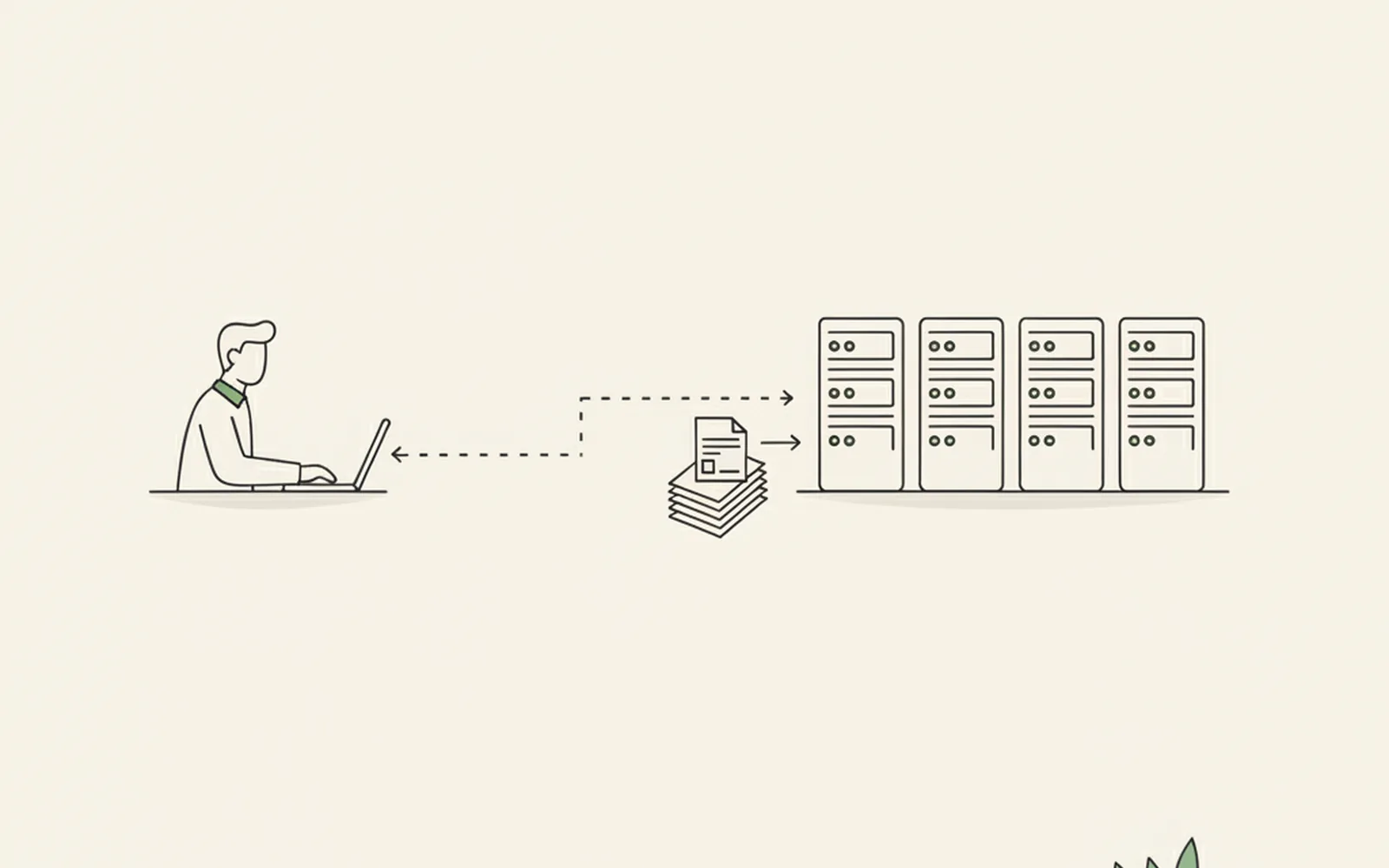
- TACC announced Sagebrush on 18 November 2026: an NSF-funded service that keeps open AI models, agentic tools and RAG services running all the time for open science researchers.
- It runs mainly on SambaNova chips. The grant started on 15 September 2026, and the first two years are an experimental phase, so most groups will join as early users first.
- A hosted model is a dependency of your analysis. Record the model, version, prompts and retrieval settings in version control, and name the service in your paper.
The Texas Advanced Computing Center (TACC) is building Sagebrush, a service that keeps AI models and AI tools running all the time for US open science researchers. TACC announced it on 18 November 2026, during SC26. The service is funded by NSF award 2537075 and will run alongside the NSF Leadership-Class Computing Facility (LCCF) in Austin.
Sagebrush is not a batch supercomputer. TACC describes it as "a set of persistent services": models stay loaded, so a script or an agent can call them as part of a workflow without waiting in a queue. Besides general AI queries, it will host retrieval-augmented generation (RAG) services for domain-specific workflows. One of them is tuned on LCCF documentation and HPC and AI code examples to help with code development and failure analysis.
RAG means a model answers from a chosen set of documents rather than from memory alone. Many labs want the same pattern for their own instrument manuals, protocols or paper collections. They can build it in-house with a research software engineer, or use a managed setup such as RAG as a service from an outside engineering team. Either way, the retrieval code, the document set and the prompts are part of the research software and belong in version control.
What did TACC announce?
TACC announced an NSF-funded AI inference service that gives researchers persistent access to open models, agentic tools and hosted RAG. Katie Antypas, senior science and engineering advisor in NSF's Computer and Information Science and Engineering Directorate, said in the announcement that Sagebrush "provides researchers a new, persistent way to put open models and agentic tools to work on their most demanding scientific questions".
The key facts from TACC and the NSF award record:
- Funding. NSF award 2537075, which started on 15 September 2026. SambaNova's press release puts the award at $5 million, with $3.5 million for accelerator hardware.
- Hardware. Inference runs mainly on SambaNova chips that TACC has tested in early access. TACC is buying four more systems, with delivery expected in November 2026. HPCwire reports that this triples the deployment.
- Software. Apart from SambaNova's stack, TACC says it relies mainly on open-source packages for agent frameworks and the vector stores behind RAG.
- Interfaces. The NSF award abstract mentions Jupyter notebooks and web-based chatbot interfaces.
- National links. Sagebrush supports TACC's work for the National AI Research Resource (NAIRR) pilot and its move into a permanent service, together with the San Diego Supercomputer Center.
When can researchers use Sagebrush?
Not as a full production service yet. TACC plans two experimental years first, followed by three production years, and says that schedule may move faster. Over the next six to twelve months it will build a new allocation model across models and services and connect Sagebrush to its allocation systems.
TACC is looking for early users with specific use cases. Niall Gaffney of TACC's Data and AI Directorate said the goal is to "support agentic workflows that are more targeted to specific domain areas". TACC also plans to share what it learns with Los Alamos National Laboratory, which is testing SambaNova-based inference too.
Sagebrush is not the only service of this kind. Argonne's ALCF Inference Service already gives national lab researchers API access to hosted models.
Why does a shared inference service matter for research code?
A model call inside an analysis is a dependency, just like a library. Its output can change when the model, the version or the document set behind a RAG service changes. When Argonne launched its own service in May, it noted that vendor-managed frontier models may change without notice. A public service with documented models makes it easier to state exactly what a result depended on, but only if the code records that information.
Three things are worth writing down for any analysis that calls a hosted model:
- the model name and version, and the service that hosted it;
- the prompts, parameters and, for RAG, the document set and retrieval settings;
- the date of the run, because hosted models are retired and replaced.
Our guide to reproducible environments covers how to pin software versions. A model endpoint needs the same treatment, even though it does not live on your machine.
What should research groups do now?
- Write down the use case. TACC asks early users for specific use cases. A short description of the data, the model you need and the expected volume of calls is also what an allocation request will ask for.
- Keep model calls behind one function. If your code calls a model in one place, you can switch between Sagebrush, a national lab service or a local model without rewriting the analysis.
- Put prompts and retrieval settings in git. Treat them like configuration files. Our post on version control for researchers shows the basic workflow.
- Check generated code before you rely on it. A RAG service tuned on HPC documentation can suggest fixes for failing jobs. As with AMD's HPC Assistant, those fixes still need a test against a known result.
- Name the service in your paper. Add the model, version and host to the methods section and the code availability statement.
Questions about Sagebrush
What is Sagebrush?
Sagebrush is an AI inference service that the Texas Advanced Computing Center is building with an NSF award (number 2537075). It keeps open AI models, agentic tools and retrieval-augmented generation (RAG) services running all the time for researchers, instead of as batch jobs.
Can I use Sagebrush now?
Not as a production service yet. The NSF grant started on 15 September 2026, and the first two years are an experimental phase. TACC says it is looking for early users with specific use cases and will build a new allocation model over the next six to twelve months.
What hardware does Sagebrush run on?
Mainly SambaNova AI chips. TACC is buying four more SambaNova systems, with delivery expected in November 2026. SambaNova says the award is $5 million, with $3.5 million for accelerator hardware, and that the purchase triples TACC's existing deployment.
Does using a hosted model change how I publish my code?
Yes. If an analysis calls a model, record which model and version you used, keep the prompts and retrieval settings in version control, and describe the service in your methods or code availability statement so others can see what the result depends on.
Keep reading. More from the desk.
AMD releases HPC Assistant: an open-source AI guide for supercomputer users
AMD's open-source HPC Assistant answers researchers' questions from their own centre's documentation. It debuted on LUMI and is coming to Frontier.
NVIDIA launches Nemotron for Science: AI agents that run and repair research code
NVIDIA released an open kit for science agents at SC26. A KTH agent fixed 81% of broken GROMACS setups overnight. Here is what labs should check first.
OpenAI study: scientists say AI speeds up research code, but checking it is the hard part
A new OpenAI study of 1,819 scientists finds research code is where AI saves the most time. It is also where scientists spend the most effort checking the answers.